TACTICAL TRAINING

Private Instruction & Group Training on 270+ Acres

TRAINING COURSE SCHEDULE

OCT 3–5, 2026

Low Light Operators Course

Civilians may attend but are not eligible to receive CLEET credit for this course.

Length
24 hours (3 nights)
Check-In
3:30 PM daily
Start Time
4:00 PM daily
Accreditation
CLEET Accredited
Skill Level
Basic/Advanced
Audience
Military · Law Enforcement · Armed Security
Max Class
16 students
Prerequisites
None
Upon Completion
Immediate AAR (lessons learned, inter-team discussion) · Certificate of Completion

Essential skills and practical experience with night vision equipment across a range of operational scenarios. Classroom instruction combined with hands-on exercises to build proficiency and confidence in low-light environments.

Full course details

Learning Objectives

  • Night vision technology fundamentals, safety protocols, maintenance procedures, and tactical applications.
  • Use of white light and night vision as a force multiplier in a tactical environment.
  • Troubleshoot and resolve common equipment issues.

Topics Covered

  • Principles and types of night vision technology.
  • Principles and types of IR aiming devices.
  • Safe operation and maintenance of night vision and aiming devices.
  • Navigation and observation in low-light conditions.
  • Safe, accurate target engagement from 3 to 300 yards.
  • Primary-to-secondary transitions, passive and with WML, rifle and handgun.

Night-by-Night

Night 1

Introduction to night vision and IR aiming devices, technology overview, equipment setup, and safety guidelines. Basic handling exercises, operational limitations, dexterity drills, and terrain walks. Zeroing options for individual IR pointer/illuminators (coaxial or stand-alone). Shooting at zero distance, then out to the limit of each shooter's gear.

Night 2

Weapon-mounted lights and white-light metrics for a period of darkness, then back under NVDs (CQM). Troubleshooting and best practices for transitioning green to white and back. Night ends with a practical assessment of low-light shooter capability.

Night 3

Basic team movement, drills in and around vehicles (interdiction), and movement in rural terrain, then transition to urban and CQB environments for additional equipment familiarization.

Required Equipment

  • Helmet or “skull crusher” for mounting NVDs.
  • Red dot and L.A.M.-equipped patrol rifle (AR-15/similar) with weapon-mounted white light.
  • Duty-rated handgun (MRDS-mounted) with weapon-mounted white light and strong-side retention holster.
  • Minimum 1,000 rounds rifle and 250 rounds handgun ammunition.
  • Eye and ear protection.
  • Duty gear (sling, magazine pouches – at least 2 per weapon system, etc.).
  • Night vision equipment if available. No gear? Rent the full package through Aurora Tactical Group LLC.
  • Handheld flashlight, optic and weapon cleaning gear, spare batteries for all electronics, weather-appropriate clothing, bug spray, food and water.
FEB 27–28, 2027

CQB Basic

Length
16 hours (2 days)
Audience
Military · Law Enforcement · Armed Security
Max Class
16 students
Prerequisites
None
Upon Completion
Immediate AAR (lessons learned, inter-team discussion) · Certificate of Completion

Close-Quarters Battle relies on core CQB principles to overwhelm threats in confined spaces. Fundamentals focus on safely entering and dominating a linear structure while using situational and spatial awareness to contain and neutralize threats. Secure and evacuate hostages while maintaining control through systematic clearing, constant communication, and effective use of angles.

Full course details

Learning Objectives

  • Weapon safety in team proximity and non-permissive environments.
  • Mental preparation for a trained response to contact, alone or in a team.
  • Room clearing, hallway movement, intersections, and stairwells.

Topics Covered

  • What drives CQB.
  • Principles and fundamentals of CQB.
  • Deliberate (LE) and assaultive CQB.
  • Room clearing and follow-on tactical problem solving.
  • Post incident.
  • Hallway movement.
  • L, T, and X intersections.
  • Stairwells, ascending and descending (if available).

Required Equipment

  • Patrol rifle (AR-15/similar) with sling.
  • Duty-rated handgun with strong-side retention holster.
  • Minimum 500 rounds rifle and 250 rounds handgun ammunition.
  • Eye and ear protection.
  • Knee pads and shooting mat advised.
  • Duty gear (sling, magazine pouches, etc.).
MAR 13–15, 2027

Patrol Rifle Operators Course

Length
24 hours (3 days)
Accreditation
CLEET Accredited
Skill Level
Basic/Advanced
Audience
Military · Law Enforcement · Armed Security
Max Class
16 students
Prerequisites
None
Upon Completion
Immediate AAR (lessons learned, inter-team discussion) · Certificate of Completion

An intensive three-day course built on hands-on weapon handling, marksmanship, and real-world scenario exercises. Participants leave confident and proficient in the foundational skills and tactical knowledge needed to safely and effectively deploy a patrol rifle in the field.

Full course details

Learning Objectives

  • Safe, proficient patrol rifle operation in a variety of field conditions.
  • Sound decision-making and tactical skill in dynamic situations.

Topics Covered

  • Firearms safety.
  • Rifle nomenclature and maintenance.
  • Zeroing and ballistics.
  • Marksmanship fundamentals.
  • Shooter's Solution.
  • Movement and positioning using cover and concealment.
  • Primary-to-secondary transitions.
  • Reloads and malfunction clearing under stress.
  • Practical assessments and data collection to cut time while solving problems.

Required Equipment

  • Patrol rifle (AR-15/similar) with quality sling.
  • Duty-rated handgun with strong-side retention holster.
  • Minimum 1,000+ rounds rifle and 250 rounds handgun ammunition.
  • Eye and ear protection.
  • Knee pads and shooting mat advised.
  • Duty gear (sling, magazine pouches, etc.).
MAR 27–28, 2027

Handgun I

LEO / agencies only · Special pricing

Length
16 hours (2 days)
Accreditation
CLEET Accredited
Skill Level
Basic/Intermediate
Audience
Military · Law Enforcement · Armed Security
Max Class
16 students
Prerequisites
None
Upon Completion
Immediate AAR (lessons learned, inter-team discussion) · Certificate of Completion

A foundational course developing safe weapon handling, marksmanship fundamentals, practical defensive shooting skills, and decision-making under realistic training conditions.

Full course details

Learning Objectives

  • Safe firearm handling.
  • Marksmanship fundamentals.
  • Manipulation fundamentals.
  • When to trade and index fundamentals by problem, using the Shooter's Solution.
  • Identify and clear common handgun malfunctions.

Topics Covered

  • Firearm safety.
  • All necessary manipulations (hard skills).
  • Fundamentals of marksmanship.
  • Grip, stance, sight package, and trigger control.
  • Drawing from the holster.
  • Reload techniques.
  • Multiple target engagement.

Required Equipment

  • Duty or serviceable handgun.
  • Minimum three magazines.
  • Strong-side holster.
  • Minimum three magazine pouches.
  • Eye and hearing protection.
  • 1,000 rounds of ammunition.
APR 24–26, 2027

Low Light Operators Course

Length
24 hours (3 nights)
Accreditation
CLEET Accredited
Skill Level
Basic/Advanced
Audience
Military · Law Enforcement · Armed Security
Max Class
16 students
Prerequisites
None
Upon Completion
Immediate AAR (lessons learned, inter-team discussion) · Certificate of Completion

Essential skills and practical experience with night vision equipment across a range of operational scenarios. Classroom instruction combined with hands-on exercises to build proficiency and confidence in low-light environments.

Full course details

Learning Objectives

  • Night vision technology fundamentals, safety protocols, maintenance procedures, and tactical applications.
  • Use of white light and night vision as a force multiplier in a tactical environment.
  • Troubleshoot and resolve common equipment issues.

Topics Covered

  • Principles and types of night vision technology.
  • Principles and types of IR aiming devices.
  • Safe operation and maintenance of night vision and aiming devices.
  • Navigation and observation in low-light conditions.
  • Safe, accurate target engagement from 3 to 300 yards.
  • Primary-to-secondary transitions, passive and with WML, rifle and handgun.

Night-by-Night

Night 1

Introduction to night vision and IR aiming devices, technology overview, equipment setup, and safety guidelines. Basic handling exercises, operational limitations, dexterity drills, and terrain walks. Zeroing options for individual IR pointer/illuminators (coaxial or stand-alone). Shooting at zero distance, then out to the limit of each shooter's gear.

Night 2

Weapon-mounted lights and white-light metrics for a period of darkness, then back under NVDs (CQM). Troubleshooting and best practices for transitioning green to white and back. Night ends with a practical assessment of low-light shooter capability.

Night 3

Basic team movement, drills in and around vehicles (interdiction), and movement in rural terrain, then transition to urban and CQB environments for additional equipment familiarization.

Required Equipment

  • Helmet or “skull crusher” for mounting NVDs.
  • Red dot and L.A.M.-equipped patrol rifle (AR-15/similar) with weapon-mounted white light.
  • Duty-rated handgun (MRDS-mounted) with weapon-mounted white light and strong-side retention holster.
  • Minimum 1,000 rounds rifle and 250 rounds handgun ammunition.
  • Eye and ear protection.
  • Duty gear (sling, magazine pouches – at least 2 per weapon system, etc.).
  • Night vision equipment if available. No gear? Rent the full package through Aurora Tactical Group LLC.
  • Handheld flashlight, optic and weapon cleaning gear, spare batteries for all electronics, weather-appropriate clothing, bug spray, food and water.
MAY 29–30, 2027

Vehicle Counter Ambush

Length
16 hours (2 days)
Accreditation
CLEET Accredited
Skill Level
Intermediate/Advanced
Audience
Military · Law Enforcement · Armed Security
Max Class
16 students
Prerequisites
Handgun I
Upon Completion
Immediate AAR (lessons learned, inter-team discussion) · Certificate of Completion

Applies the hard skills from Handgun I to complex shooting problems in vehicle operations and interdiction. Emphasis on identifying direction of contact, hasty dismount, and movement to and through points of cover on a vehicle, with battle drills after dismount in a limited non-permissive environment.

Full course details

Learning Objectives

  • Safe weapon handling inside the vehicle cabin.
  • Principles of hasty dismount.
  • Vehicle cover and concealment points and alternate shooting positions.
  • Interdiction principles.
  • Intermediate barriers and their effect on trajectory across calibers.
  • Battle drills after dismount in a limited non-permissive environment.

Topics Covered

  • Dynamic handgun/rifle employment inside and immediately outside a vehicle.
  • Shooting in different gears (D, R, P).
  • Vehicle cover and concealment.
  • Shoot-move-shoot and shooting on the move (all angles).
  • Positional shooting.
  • Engagements from multiple distances and positions.
  • Incapacitated driver/shooter.

Required Equipment

  • Duty or serviceable handgun.
  • Duty or serviceable rifle with sling.
  • Minimum three magazines per weapon system.
  • Strong-side holster.
  • Minimum three magazine pouches per weapon system.
  • Eye and hearing protection, long-sleeve shirt, thin gloves, and a face mask fully covering mouth and nose.
  • 250 rounds handgun and 250 rounds rifle ammunition.
JUN 26–28, 2027

Low Light Operators Course

Length
24 hours (3 nights)
Accreditation
CLEET Accredited
Skill Level
Basic/Advanced
Audience
Military · Law Enforcement · Armed Security
Max Class
16 students
Prerequisites
None
Upon Completion
Immediate AAR (lessons learned, inter-team discussion) · Certificate of Completion

Essential skills and practical experience with night vision equipment across a range of operational scenarios. Classroom instruction combined with hands-on exercises to build proficiency and confidence in low-light environments.

Full course details

Learning Objectives

  • Night vision technology fundamentals, safety protocols, maintenance procedures, and tactical applications.
  • Use of white light and night vision as a force multiplier in a tactical environment.
  • Troubleshoot and resolve common equipment issues.

Topics Covered

  • Principles and types of night vision technology.
  • Principles and types of IR aiming devices.
  • Safe operation and maintenance of night vision and aiming devices.
  • Navigation and observation in low-light conditions.
  • Safe, accurate target engagement from 3 to 300 yards.
  • Primary-to-secondary transitions, passive and with WML, rifle and handgun.

Night-by-Night

Night 1

Introduction to night vision and IR aiming devices, technology overview, equipment setup, and safety guidelines. Basic handling exercises, operational limitations, dexterity drills, and terrain walks. Zeroing options for individual IR pointer/illuminators (coaxial or stand-alone). Shooting at zero distance, then out to the limit of each shooter's gear.

Night 2

Weapon-mounted lights and white-light metrics for a period of darkness, then back under NVDs (CQM). Troubleshooting and best practices for transitioning green to white and back. Night ends with a practical assessment of low-light shooter capability.

Night 3

Basic team movement, drills in and around vehicles (interdiction), and movement in rural terrain, then transition to urban and CQB environments for additional equipment familiarization.

Required Equipment

  • Helmet or “skull crusher” for mounting NVDs.
  • Red dot and L.A.M.-equipped patrol rifle (AR-15/similar) with weapon-mounted white light.
  • Duty-rated handgun (MRDS-mounted) with weapon-mounted white light and strong-side retention holster.
  • Minimum 1,000 rounds rifle and 250 rounds handgun ammunition.
  • Eye and ear protection.
  • Duty gear (sling, magazine pouches – at least 2 per weapon system, etc.).
  • Night vision equipment if available. No gear? Rent the full package through Aurora Tactical Group LLC.
  • Handheld flashlight, optic and weapon cleaning gear, spare batteries for all electronics, weather-appropriate clothing, bug spray, food and water.

Registration & Inquiries

Billy Smith (Smith Group Combatives) handles registration for all courses. Contact Billy for more information and to register.

Billy Smith · Smith Group Combatives
smithgroupcombatives.com
billy@smithgroupcombatives.com

Email Billy Smith Visit Smith Group Combatives

TRAINING PROGRAMS

From one-on-one instruction to full-scale law enforcement exercises, we build training around your goals.

One-on-One

Private Instruction

Personalized one-on-one sessions tailored to your skill level and goals. Whether you're refining fundamentals or preparing for competition, we customize every session to your needs. Rifle, pistol, or combined arms training on world-class terrain.

Teams of 4–20

Group Training

Team-based exercises for groups of 4–20 participants. Build communication, coordination, and marksmanship under realistic conditions across rolling hills, wooded draws, and open fields. Ideal for clubs, teams, and experienced shooting groups.

LE / Military

Law Enforcement

LE qualification courses and scenario-based training on 270+ acres of diverse terrain. Night operations, vehicle stages, structures, and dynamic shooting positions. Designed to meet department qualification standards and build real-world skills.

Team Building

Corporate Team Building

Unique outdoor team experiences that build trust, communication, and leadership. No corporate ropes course — this is the real thing. Customizable events on world-class competition terrain with professional instruction and safety oversight.

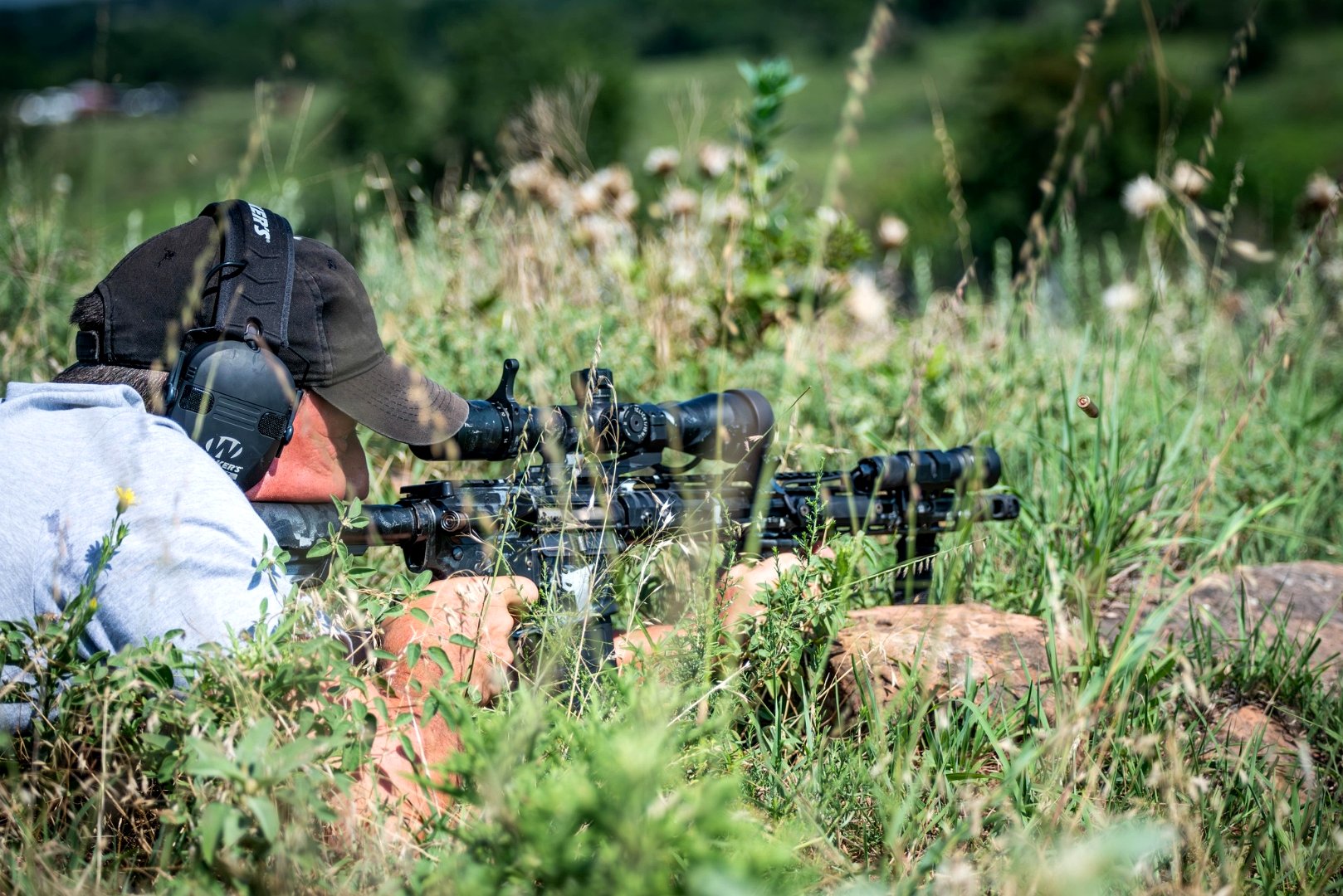
Rifle shooting in grass at The Burial Mound

BOOK YOUR TRAINING


Tell us about your training goals and we'll build a custom program. Email us directly to get started.